
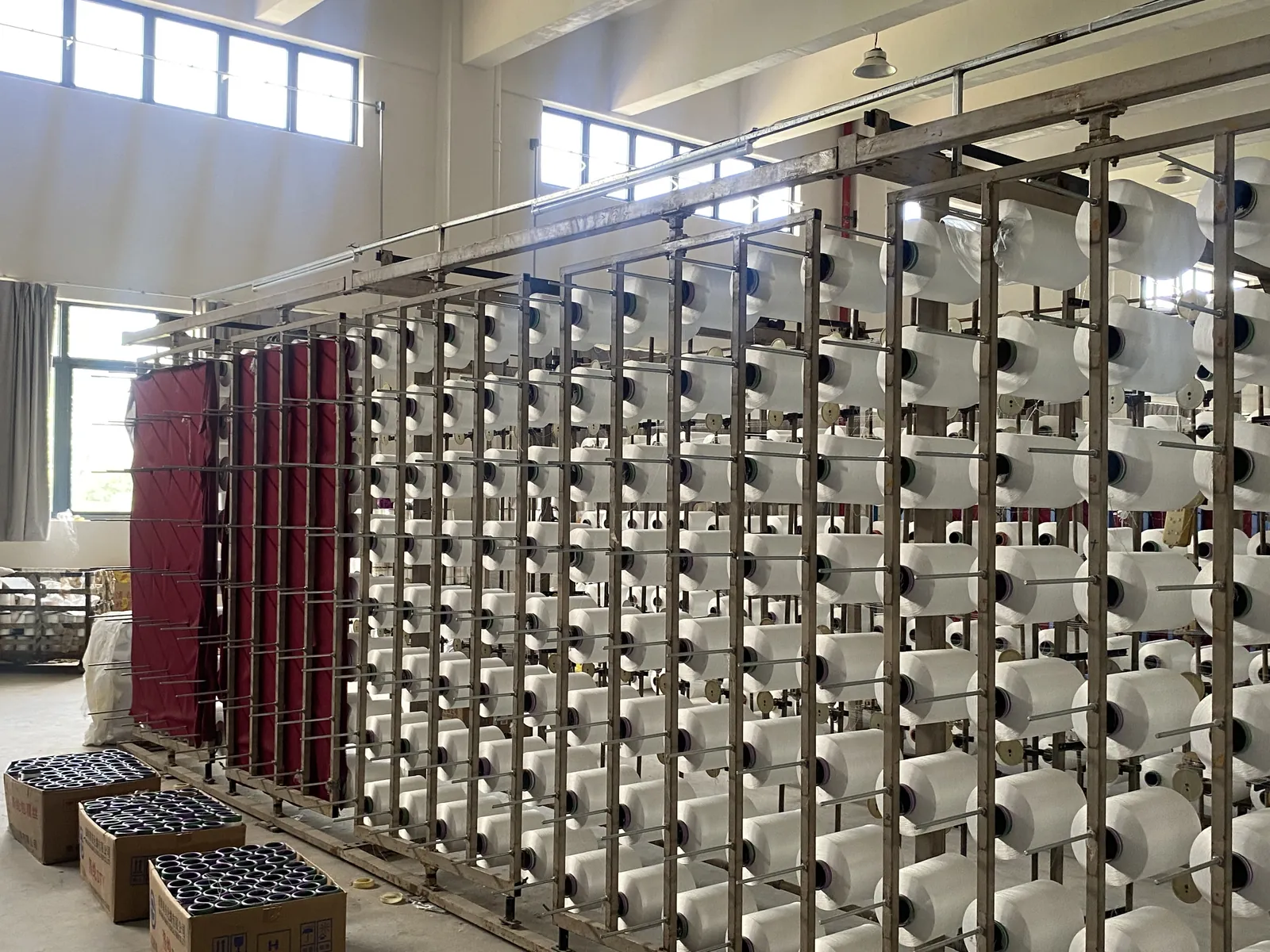
Warping area
Beam preparation with tension control. This is the first place usable width is decided.
Warping, weaving and inspection run in our own building in Lijiaxiang Town Industrial Park. Dyeing and finishing are coordinated with long-term partner houses. Here is what each step actually controls, and why it matters to the roll you receive.
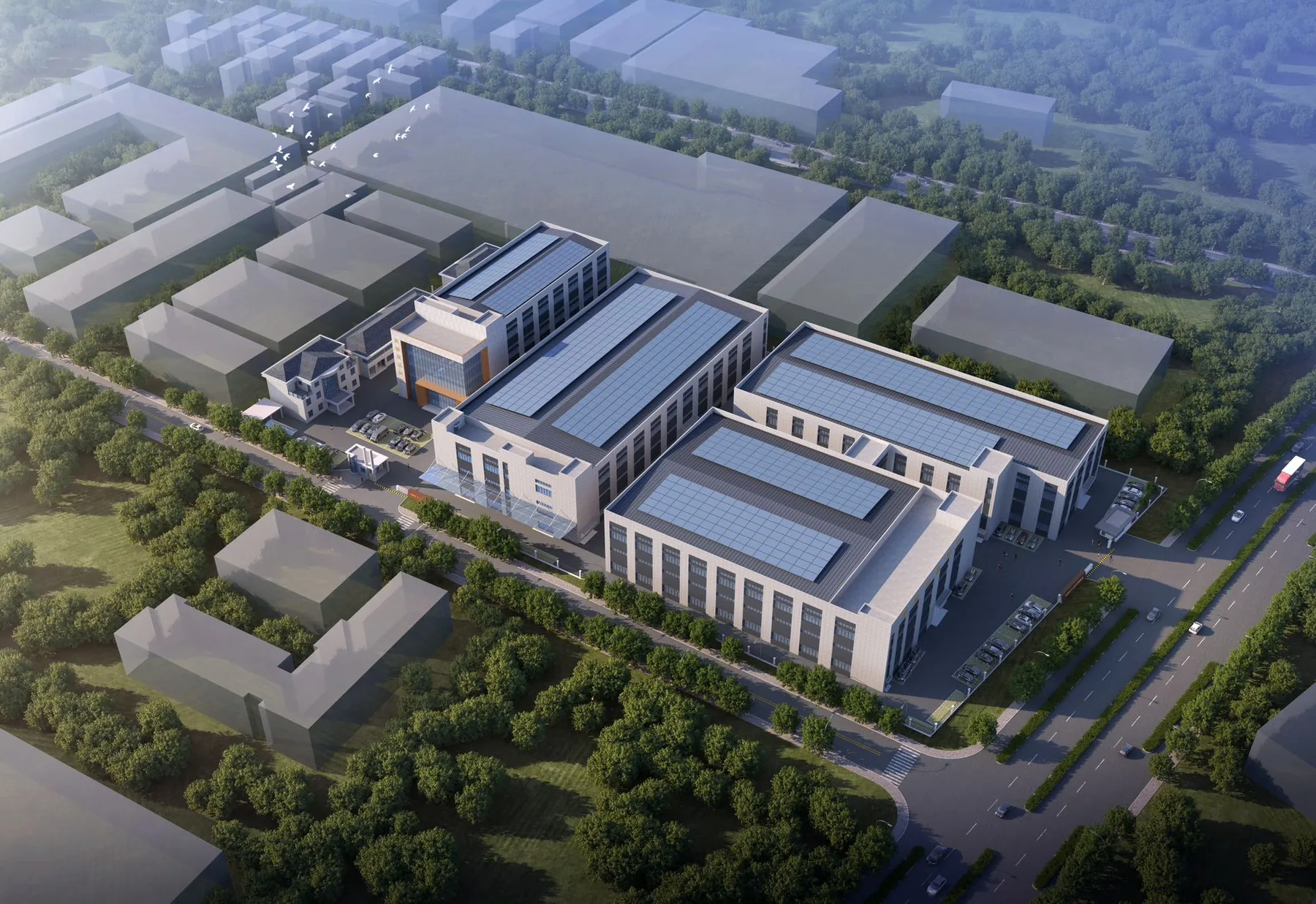
The site
Jacquard weaving is unforgiving about consistency. A beam warped at uneven tension, a loom run at a drifting pick density, or a finishing line set differently from the sample will all show up as the same thing to a buyer: a roll that does not match the last one.
Keeping warping, weaving and final inspection under one roof removes the handover points where that consistency usually breaks. It also means a complaint can be traced back to a specific beam, loom and shift rather than to a supplier somewhere upstream.
Process
Each stage below lists what it controls. If a quality problem appears, this is the sequence we work backwards through.
Composition is checked against the approved specification before warping. Cationic and regular polyester are kept separate because the two-tone effect depends on them dyeing differently.
Beams are wound in-house. Even tension at this stage is what keeps usable width stable later in the roll — a fault here shows up as width variation at the cutting table, weeks downstream.
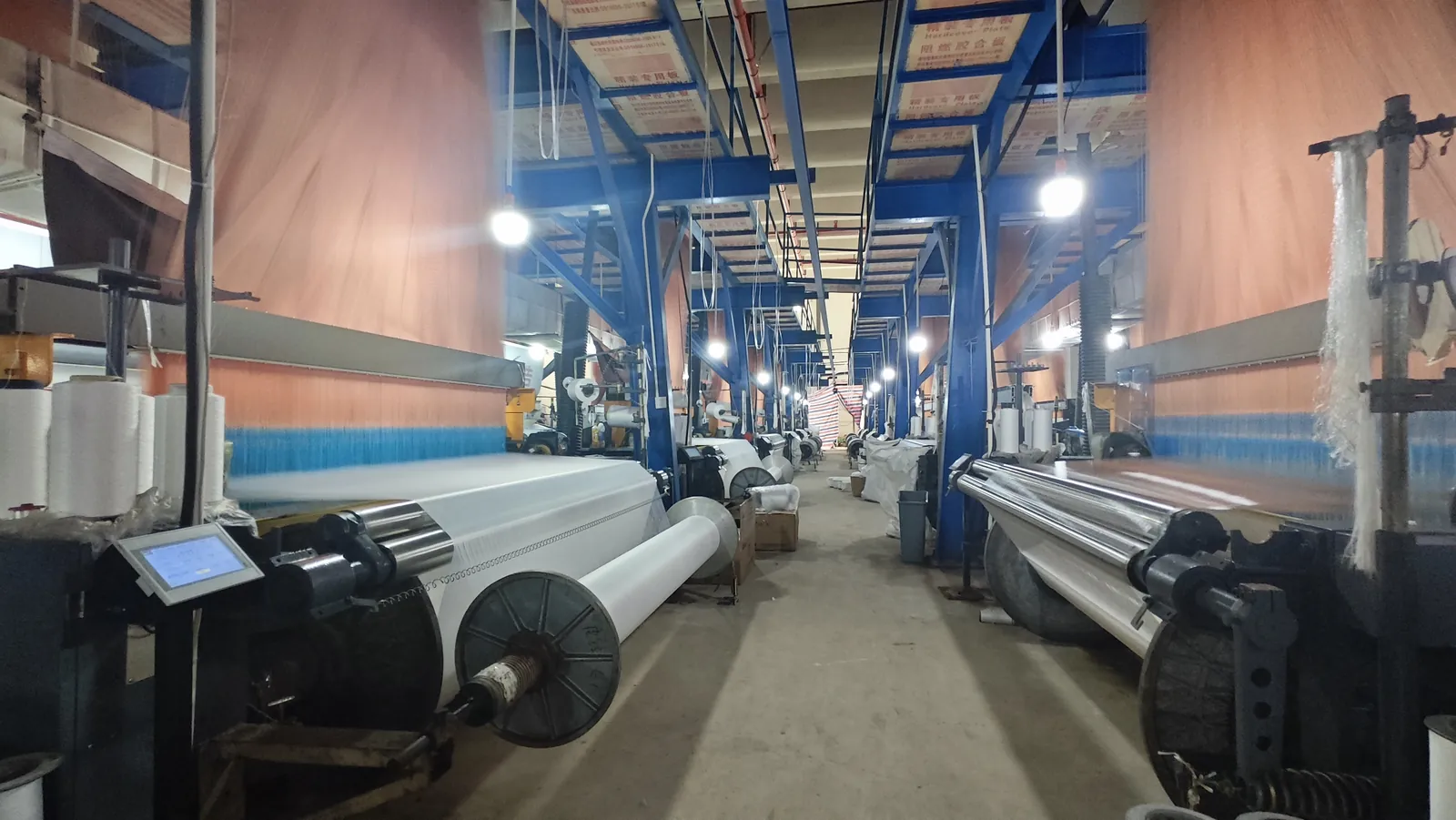
Pattern, repeat and pick density are set on the loom and monitored through the run. We check the surface at intervals rather than only on the first metre, because pattern drift appears gradually.
Dyeing and finishing are carried out with partner houses we have worked with for years. Colour is matched to the approved lab dip; finishing is set to the agreed hand feel.
Every roll is checked for usable width, GSM, shade, pattern alignment and surface defects under inspection light. Results are recorded roll by roll.
Rolls are packed to the buyer's marking instructions and moved by truck to Shanghai or Ningbo. Both ports are within a few hours of Changxing, which keeps inland haulage short.

Equipment areas
We describe areas rather than publishing machine counts, because a count tells a buyer less than whether the line is organised for repeat orders.
Beam preparation with tension control. This is the first place usable width is decided.
Looms set for the pattern, repeat and pick density of each order, with the jacquard mechanism controlling the motif.
Dyeing and finishing scheduled with partner houses against our approved lab dip and hand feel standard.
Roll-by-roll checking under inspection light for width, GSM, shade and surface defects.
Roll packing, marking and private label preparation before the container is loaded.
Swatch cutting and sample dispatch. Stock qualities usually leave within 5–7 days.
Lead times
Lead time depends on whether the quality is running, whether the colour needs a new lab dip, and whether the pattern is new. These are the ranges we work to.
| Stage | Typical duration |
|---|---|
| Stock quality sample dispatch | 5–7 days |
| New pattern: drafting and weaving trial | 2–3 weeks |
| Lab dip preparation and approval | 5–10 days |
| Bulk production after sample approval | Confirmed per order |
| Inland transport to Shanghai / Ningbo | A few hours by truck |
Bulk production time is quoted per order because it depends on " quantity, colour count and finishing requirements. We confirm a ship date in writing before production starts.
Tell us the quality, colour count and monthly quantity. We will confirm what the floor can hold and give you a ship date rather than an estimate.